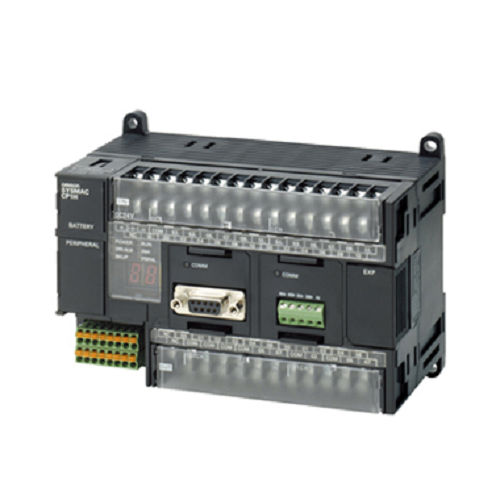
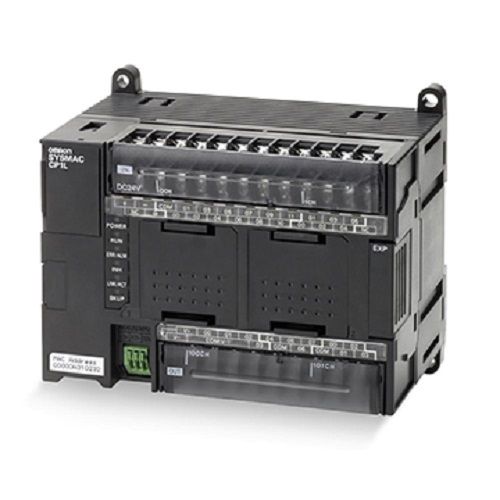
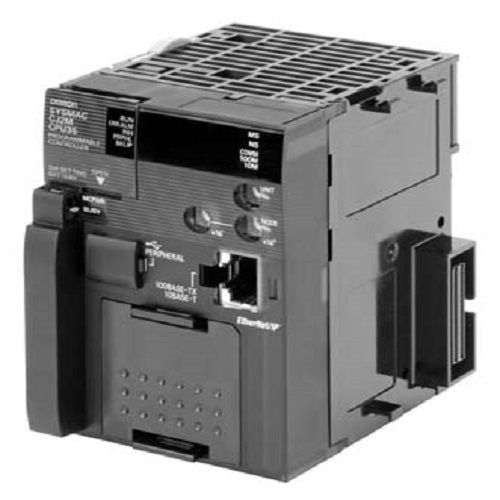
CP1H-X40DT-D Omron PLC About
Designed for compact machines, the CP1H is the advanced high-speed all-in-one compact PLC. Four high-speed counters and four pulse outputs are ideal for multi-axis positioning control.
Specifications
| Battery Backup |
Yes |
| Communications |
USB, 2 Option Ports |
| Display |
2 Digit 7 Segment |
| Input type |
DC |
| Number of Expansion IO |
7 |
| Number of Option Modules |
2 |
| Real-time clock, calendar |
Yes |
Versatile Industrial Automation ControlThe Omron CP1H-X40DT-D PLC is engineered to deliver powerful automation performance in a compact footprint. With expandable I/O and a wide range of communication options, it streamlines machine control, factory automation, and process management. Its capability to interface with NPN/PNP sensors, multiple programming ports, and robust environmental resistance make it suitable for challenging industrial environments.
Flexible I/O and Advanced Motion SupportSupporting both sinking and sourcing configurations for digital inputs and transistor outputs, this PLC adapts to diverse sensor and actuator types. The high-speed embedded 4-axis pulse output (up to 100kHz) enables precise positioning, making it valuable in applications such as packaging, sorting, and assembly systems requiring coordinated motion control.
Reliability and Easy IntegrationDesigned for seamless installation, the CP1H-X40DT-D can be DIN-rail or panel mounted. Its battery-backed clock/calendar, photcoupler isolated I/O, and comprehensive certifications (CE, cULus, KC, RoHS) ensure long-term operational reliability and safety. Integration with widely-used industrial networks and easy programming through OMRON CX-Programmer ensure minimal downtime and efficient deployment.
FAQ's of CP1H-X40DT-D Omron PLC:
Q: How is the CP1H-X40DT-D PLC programmed, and what software do I need?
A: The CP1H-X40DT-D PLC is programmed using OMRON's CX-Programmer software. This software provides a user-friendly environment for creating, editing, and managing ladder logic and advanced control functions. It supports direct connection via USB or RS-232C interfaces.
Q: What types of sensors and actuators are compatible with the PLC's inputs and outputs?
A: This model is compatible with both NPN and PNP digital sensors thanks to sink/source selectable digital inputs. The 16 transistor outputs are also sink/source selectable, supporting a wide range of actuators such as relays, solenoids, and stepper/servo motor drivers.
Q: When should I consider using the expansion capability of the CP1H-X40DT-D, and what are its limits?
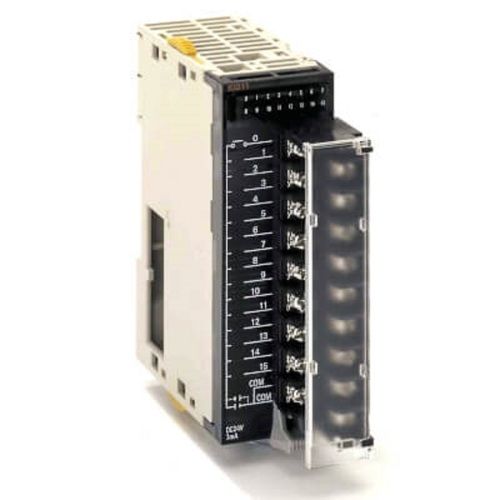
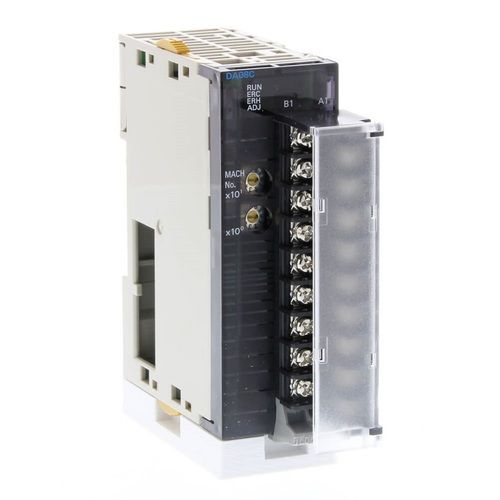
A: Expansion is recommended when your application requires additional I/O points or communication capabilities beyond the built-in terminals. The CP1H-X40DT-D supports up to 3 I/O expansion units or cards, allowing a maximum of 160 I/O points.
Q: Where can the CP1H-X40DT-D be mounted, and what are the environmental limitations?
A: It may be mounted on a DIN rail or directly on a control panel. The PLC operates reliably in environments with temperatures between 0 to 55C and offers vibration and shock resistance as per industrial standards. An IP20 rating ensures protection when panel-mounted.
Q: What is the process for achieving precise motion or positioning control with this PLC?
A: For motion control, the CP1H-X40DT-D provides four 100kHz high-speed pulse outputs designed for stepper or servo motor control. Users can configure pulse trains and direction via the CX-Programmer, making the process suitable for tasks like coordinated axis movement in packaging or assembly machines.
Q: How does the built-in memory and data storage benefit industrial applications?
A: With 32k words of data memory and a 20k step program capacity, the PLC facilitates complex automation processes and extensive recipe or production data management, reducing the need for external data storage and allowing high-speed real-time processing.
Q: What communication protocols and ports are available for connecting the PLC to networks and devices?
A: The CP1H-X40DT-D supports Modbus and Host Link communication protocols. It includes USB and RS-232C ports as standard, with optional RS-485 and Ethernet connectivity attainable via expansion options, making it easy to integrate into diverse industrial networks.





 Send Inquiry

