TM200C60R Schneider PLC About
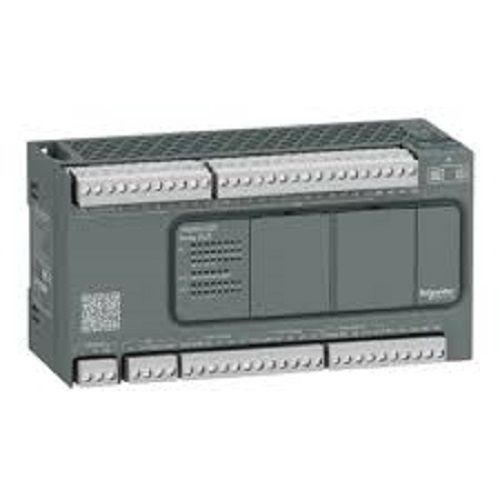
Schneider TM200C60R Controller Modicon PLC
| Model No |
TM200C60R
|
| Range of product |
Easy Modicon M200
|
| Easy Modicon M200 |
Logic controller
|
| rated supply voltage |
220 V AC
|
| discrete I/O number |
60
|
| discrete input number |
I2...I5: 4 fast input I0, I1, I6, I7: 4 high speed input I8...I35: 28 regular input
|
| discrete output number |
24 relay
|
| discrete input voltage |
24 V
|
| discrete input voltage type |
DC
|
| discrete input current |
7 mA for input
|
| discrete input logic |
Sink or source (positive/negative) type 1 conforming to EN/IEC 61131-2
|
| discrete output voltage |
24 V DC 220 V AC
|
| discrete output current |
2 A
|
| discrete output type |
Relay normally open
|
| power consumption in VA |
61.74 VA at 100...240 V AC (with max I/O)
|
| maximum number of I/O expansion module |
4 with 128 discrete output(s) for transistor output 4 with 88 discrete output(s) for relay output
|
| supply voltage limits |
85.264 V
|
| inrush current |
50 A
|
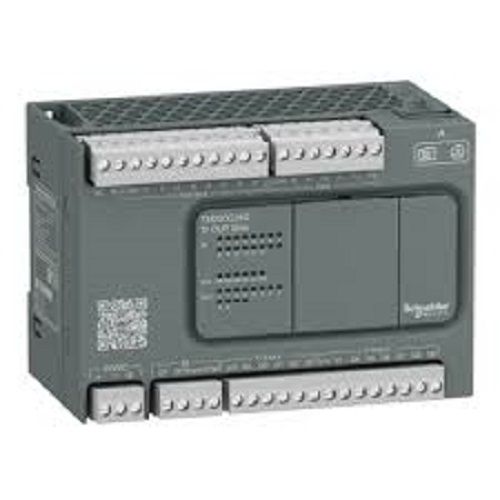
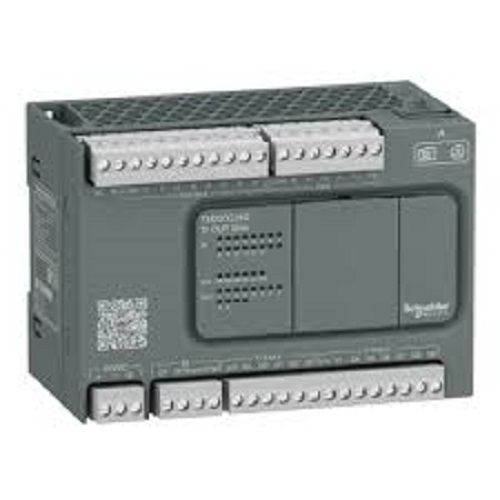
Reliable Industrial PerformanceEngineered for demanding environments, the TM200C60R PLC offers reliable operation with IEC 60068-2-6 compliant vibration resistance and an IP20 protection rating. The device can be mounted easily on DIN rails, and its grey, rugged exterior meets essential industrial standards, ensuring long-term stability in factory and machine automation.
Versatile Communication OptionsThis PLC is equipped with multiple communication ports, including Ethernet, two RS485, and a USB mini-B interface, ensuring versatile connectivity for industrial networks. Modbus RTU/ASCII and Modbus TCP protocols are supported, enabling efficient communication with a wide array of industrial devices and effective process control.
Expandable and Flexible DesignAccommodating up to seven expansion modules, the TM200C60R easily adapts to evolving automation needs. Its integrated CPU, 36 digital inputs, and 24 relay outputs provide significant control capabilities, while add-on modules allow users to increase I/O capacity and tailor the system to specific application requirements.
FAQ's of TM200C60R Schneider PLC:
Q: How is the TM200C60R Schneider PLC typically used in industrial automation?
A: The TM200C60R PLC orchestrates automation tasks such as machine operation, process control, and factory automation by receiving digital input signals, processing them via programmed logic, and outputting relay actions to manage devices like sensors, actuators, and motors.
Q: What programming environment is compatible with the TM200C60R?
A: The TM200C60R is programmed using the EcoStruxure Machine Expert - Basic software, allowing users to design, test, and deploy control logic efficiently using a user-friendly interface tailored for Schneider Electric PLCs.
Q: When should I consider expanding the PLC system?
A: Expansion is recommended when the number of required I/O points exceeds the base 60 supported by the PLC. Up to seven additional expansion modules can be integrated, enabling scalability as your automation needs grow or change.
Q: Where can I install the TM200C60R in my facility?
A: The PLC is designed for DIN rail mounting inside control panels within industrial environments. Ensure installation in a location that maintains the recommended operating temperature range of 0C to 55C and protection against dust and moisture, conforming to its IP20 rating.
Q: What communication protocols are supported by the TM200C60R?
A: It supports Modbus RTU/ASCII and Modbus TCP protocols, allowing integration with a wide variety of industrial equipment and supervisory systems through Ethernet, RS485, or USB interfaces.
Q: How does the backup battery benefit system operation?
A: The backup battery supports data retention during power interruptions, ensuring that critical information and ongoing processes are preserved, thus minimizing downtime and protecting system integrity.
Q: What are the main benefits of using the TM200C60R Schneider PLC for industrial control?
A: Key advantages include high-speed processing (typical 1 ms response time), compact modular design, robust communication capabilities, flexibility to expand, and compliance with international safety and performance standards, all contributing to enhanced operational reliability and scalability.





 Send Inquiry

